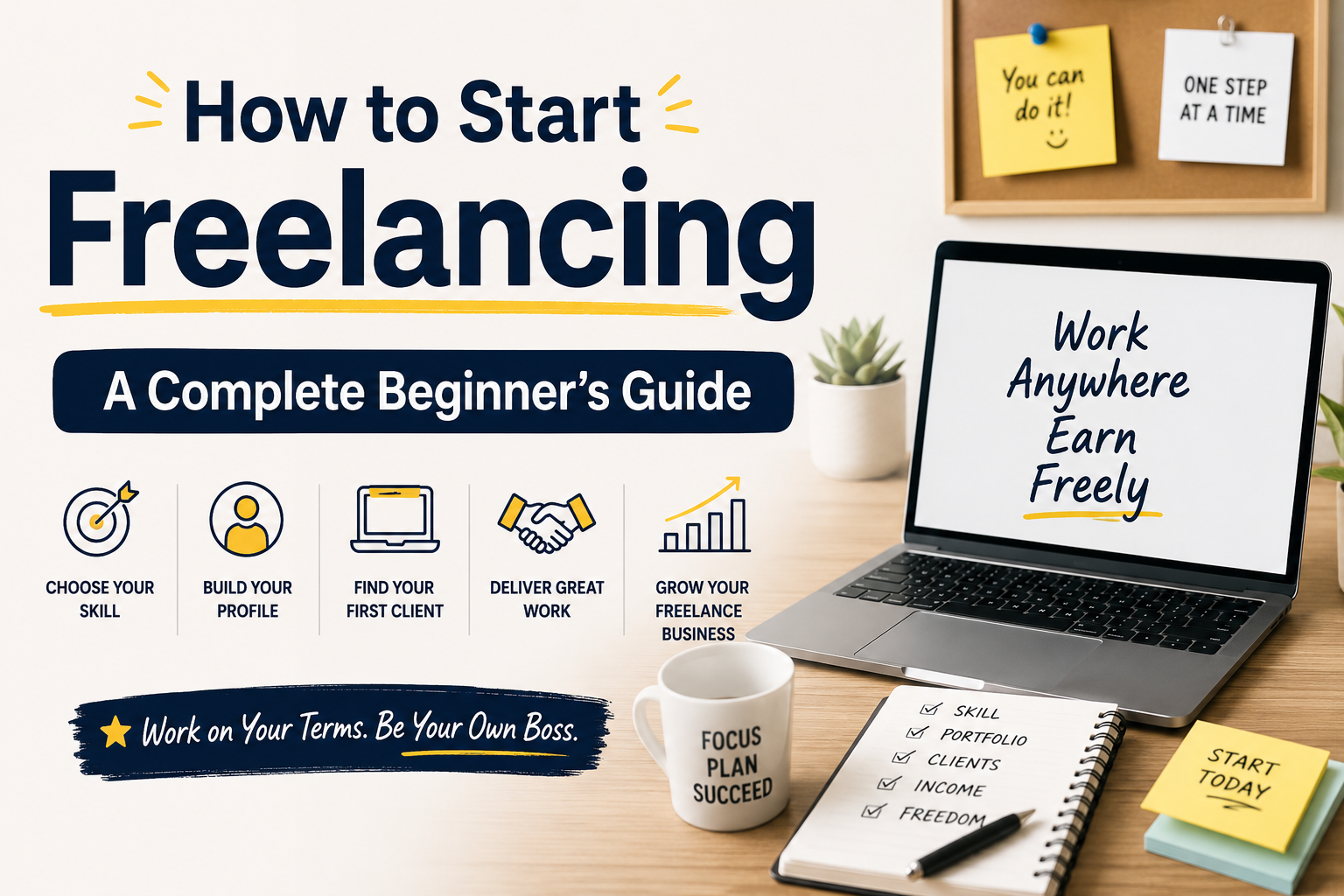
How to start freelancing is one of the most common questions people ask when they want to earn money online. If you’re wondering how to start freelancing, you’re not alone. Millions of people around the world are choosing freelancing as a flexible way to earn money online, build a successful career, and work from anywhere. Whether you’re a student, a full-time employee looking for extra income, or someone planning to become self-employed, freelancing offers endless opportunities. The best part is that you don’t need a large investment to begin just the right skills, a reliable internet connection, and the willingness to learn and grow.
Learning how to start freelancing is easier than ever because businesses are constantly looking for talented freelancers in fields like content writing, graphic design, web development, digital marketing, video editing, virtual assistance, SEO, and social media management. Even if you’re a complete beginner, you can develop valuable skills through online courses, free tutorials, and consistent practice. By creating a strong portfolio, delivering high-quality work, and maintaining good communication with clients, you can gradually build a successful freelance career and increase your income over time.
In this complete guide on how to start freelancing, you’ll discover everything you need to know to begin your journey with confidence. You’ll learn how to identify your skills, choose a profitable niche, create a professional portfolio, join the best freelancing platforms, write winning proposals, find your first clients, set competitive rates, and grow your freelance business. Whether your goal is to earn extra income or build a full-time online career, this guide will show you how to start freelancing step by step and achieve long-term success.
What Is Freelancing?
Freelancing is one of the easiest ways to earn money by using the skills you already have. Instead of working for one company full-time, you work with different clients on different projects and get paid for the work you complete. As a freelancer, you’re in control you decide when to work, where to work, and which projects to accept. All you need is a valuable skill, a computer, and an internet connection to get started.
One of the best things about freelancing is the freedom it offers. You can work from home, a coffee shop, or even while traveling. Whether you’re a student looking for extra income, a professional starting a side hustle, or someone who wants to leave a traditional job, freelancing gives you the opportunity to build a career on your own terms.
Today, companies around the world hire freelancers for services like content writing, graphic design, web development, digital marketing, video editing, SEO, virtual assistance, and many other skills. As online businesses continue to grow, the demand for freelancers is increasing every year. With the right skills, dedication, and consistent effort, freelancing can become a reliable source of income and even a full-time career.
Why Choose Freelancing?
Freelancing has become one of the most popular career choices because it gives you the freedom to work on your own terms. Instead of following a fixed office schedule, you can choose when and where you work. Whether you prefer working from home, a co-working space, or while traveling, freelancing allows you to build a career that fits your lifestyle. You also have the flexibility to choose projects that match your interests and skills, making your work more enjoyable and rewarding.
Another great reason to choose freelancing is its earning potential. Unlike a traditional job with a fixed salary, your income isn’t limited. As you improve your skills, gain experience, and build a strong reputation, you can charge higher rates and work with better-paying clients. Many freelancers start with a side income and eventually turn freelancing into a successful full-time career.
Freelancing also gives you the chance to be your own boss. You can decide which clients to work with, manage your own schedule, and build long-term professional relationships. Since you don’t need a large investment to get started, freelancing is an excellent option for students, professionals, and anyone who wants more financial freedom, career flexibility, and control over their future.
Step 1: Identify Your Skills
The first step in your freelancing journey is figuring out what skills you can offer. Don’t worry if you don’t have years of experience everyone starts somewhere. Think about the things you’re good at, the tasks you enjoy doing, or the skills you’ve learned through school, work, or personal projects. Even simple skills can become valuable services when presented professionally.

Ask yourself questions like: What do people usually ask me to help with? What tasks can I complete confidently? Could these skills help a business or an individual? Your answers will help you discover the services you can offer as a freelancer. The key is to choose a skill that you enjoy because you’ll stay motivated to learn and improve over time.
If you’re a complete beginner, you can start with beginner-friendly skills like content writing, graphic design, virtual assistance, customer support, data entry, social media management, video editing, or basic digital marketing. Focus on learning one skill well instead of trying to master everything at once. As your skills improve and you gain experience, you’ll be able to attract better clients, charge higher rates, and build a successful freelancing career.
Step 2: Choose a Profitable Freelance Niche

How to Start Freelancing successfully begins with choosing the right niche. Instead of offering every service, focus on one area where you can build expertise and deliver excellent results. Choosing a profitable freelance niche helps you stand out from the competition, attract high-quality clients, and increase your earning potential. By specializing in a skill that matches your interests and market demand, you can build a strong reputation and grow your freelance business faster.
Examples include:
Writing Niches
Writing is one of the most popular and beginner-friendly freelance careers, offering a wide range of specialization opportunities.

Some of the most profitable writing niches include blog writing, where writers create informative and engaging articles for websites; SEO content writing, which focuses on producing search engine-optimized content to improve online visibility; copywriting, which involves writing persuasive content for advertisements, sales pages, and marketing campaigns; and technical writing, which requires creating clear documentation, guides, and manuals for technical products or services. Choosing a specific writing niche can help you develop expertise, attract targeted clients, and increase your earning potential as a freelancer.
Design Niches
Design is one of the most in-demand freelancing fields, offering excellent opportunities for creative professionals. Popular design niches include logo design, where designers create unique brand identities for businesses; social media graphics, which focus on designing eye-catching visuals for platforms such as Instagram, Facebook, and LinkedIn; and UI/UX design, which involves creating user-friendly and visually appealing websites and mobile applications.
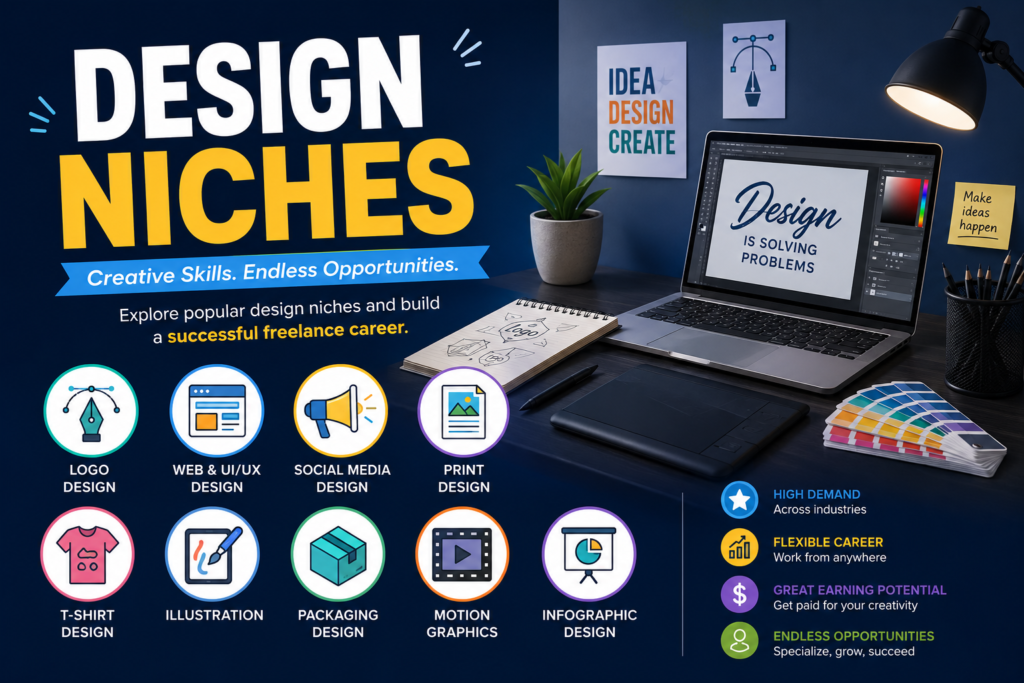
By specializing in a specific design niche, freelancers can develop expertise, build a strong portfolio, attract higher-paying clients, and establish a successful long-term career in the design industry.
Marketing Niches
Marketing is a highly profitable freelancing field with strong demand from businesses looking to grow their online presence and attract more customers.

Some of the most popular marketing niches include SEO (Search Engine Optimization), which helps websites rank higher on search engines; Social Media Marketing, which focuses on building brand awareness and engagement across social platforms; Email Marketing, which involves creating campaigns to nurture leads and increase sales; and PPC (Pay-Per-Click) Advertising, which uses paid ads to drive targeted traffic and conversions.
By specializing in a marketing niche, freelancers can position themselves as experts, deliver measurable results for clients, and increase their earning potential.
Step 3: Learn and Improve Your Skills
Freelance marketplace is highly competitive, which is why continuous learning is essential for long-term success. No matter what niche you choose, improving your skills will help you deliver better results, attract higher-paying clients, and stay ahead of industry trends.

There are many ways to develop your expertise, including taking online courses, watching YouTube tutorials, reading industry blogs, earning professional certifications, and working on practice projects.
The more knowledge and experience you gain, the more valuable your services become. As your skills improve, clients will be more willing to trust your expertise and pay higher rates for your work.
Step 4: Create a Professional Portfolio
A professional portfolio is one of the most important tools for attracting freelance clients. It serves as proof of your skills and allows potential clients to evaluate the quality of your work before hiring you. A strong portfolio should showcase your best projects and demonstrate the value you can provide.

sample projects that highlight your expertise, case studies that explain how you solved problems or achieved results, client testimonials that build trust, relevant certifications that validate your knowledge, and measurable results whenever possible.
Even if you are a beginner, you can create sample work to demonstrate your abilities and start building a portfolio that helps you stand out from the competition.
Step 5: Build Your Online Presence
A strong online presence is essential for attracting freelance clients, as many businesses and individuals research freelancers online before making hiring decisions. Create professional profiles on platforms such as LinkedIn, freelance marketplaces, personal websites, and relevant social media channels.

Make sure your profiles clearly highlight your services, skills, experience, portfolio, and contact information. Consistently updating your profiles and sharing valuable content can further enhance your credibility and visibility. A professional online presence helps build trust, showcases your expertise, and increases your chances of securing high-quality freelance opportunities.
Step 6: Join Freelance Platforms
Freelance platforms are an excellent way for beginners to find their first clients and gain valuable experience. These marketplaces connect freelancers with businesses and individuals looking for specific services, making it easier to secure projects and build a professional reputation.
Some of the most popular freelance platforms include Upwork, Fiverr, Freelancer, PeoplePerHour, and Guru. By creating a professional profile, showcasing your skills, and actively applying for relevant projects, you can start building your portfolio, earning reviews, and growing your freelance career.

Popular Freelance Platforms
- Upwork — A leading freelance marketplace where businesses hire professionals for a wide range of services.
- Fiverr — A popular platform where freelancers offer services starting at various price points across many categories.
- Freelancer — Connects freelancers with clients seeking projects in writing, design, development, marketing, and more.
- PeoplePerHour — A freelance platform focused on connecting businesses with skilled professionals for hourly and project-based work.
- Guru — A global marketplace where freelancers can find work and collaborate with clients across multiple industries.
Tips for Creating a Strong Freelance Profile
Your freelance profile is often the first impression potential clients have of you, so it’s important to make it professional and engaging. Start by using a clear, professional photo that helps build trust and credibility.

Write a compelling bio that introduces who you are, what you do, and how you can help clients achieve their goals. Highlight your expertise and experience in your chosen niche, and showcase your best work by adding relevant portfolio samples.
Be sure to list your key skills so clients can easily understand your strengths and find you for the right projects. A well-crafted profile can significantly increase your chances of attracting clients and winning freelance opportunities.
Step 7: Apply for Relevant Projects
One of the biggest mistakes new freelancers make is waiting for clients to find them. Instead, take a proactive approach by actively searching for projects that match your skills and experience. When submitting proposals, avoid using generic templates and personalize each application to the client’s specific needs.

Clearly explain how your skills can help solve their problem, and include relevant work samples that demonstrate your expertise. Keep your proposal concise, professional, and focused on the value you can provide. Remember, a few high-quality, customized applications are often far more effective than sending dozens of generic proposals.
By consistently applying for relevant projects, you can increase your chances of landing clients and growing your freelance career.
Also Read Best Free AI Tools for Beginners in 2026: A Complete Guide
Step 8: Deliver High-Quality Work
Your reputation is one of the most valuable assets you can build as a freelancer. Every project you complete is an opportunity to demonstrate your professionalism, reliability, and expertise.

Always strive to meet deadlines, communicate clearly and professionally, follow client instructions carefully, and deliver high-quality work that exceeds expectations. Being responsive and maintaining regular communication throughout a project can also help build strong client relationships.
When clients are satisfied with your work, they are more likely to hire you again, leave positive reviews, and recommend your services to others. Consistently delivering excellent results is one of the most effective ways to grow a successful freelance career.
Step 9: Collect Reviews and Testimonials
Reviews and testimonials play a crucial role in building trust and credibility as a freelancer. Potential clients often look at feedback from previous customers before deciding to hire someone, making positive reviews a powerful tool for attracting new business.

After successfully completing a project, politely ask your clients for feedback and testimonials about their experience working with you. Encourage satisfied clients to leave reviews on freelance platforms, your website, or professional profiles.
Strong reviews not only showcase your reliability and expertise but can also significantly improve your chances of winning future projects and growing your freelance career.
Step 10: Increase Your Rates Over Time
Many freelancers start with lower rates to gain experience, build their portfolio, and attract their first clients. However, as you develop your skills, complete more projects, earn positive reviews, and gain industry knowledge, your value in the marketplace increases.

Don’t be afraid to gradually raise your rates as your expertise grows. Higher rates reflect the quality of your work, experience, and ability to deliver results for clients.
By consistently improving your skills and building a strong reputation, you can attract better clients, work on more rewarding projects, and significantly increase your freelance income over time.
Common Freelancing Mistakes to Avoid
While freelancing offers excellent opportunities, many beginners make mistakes that can slow their growth and reduce their earning potential.

Some of the most common mistakes include underpricing your services, applying for projects that don’t match your skills, missing deadlines, communicating poorly with clients, and failing to build a strong portfolio.
Other mistakes include relying on a single client for all your income, neglecting to learn new skills, and ignoring the importance of reviews and testimonials.
By recognizing and avoiding these common pitfalls, you can build a stronger reputation, attract better clients, and create a successful long-term freelance career.
Also Read Make Money Online : The Complete Beginner’s Guide to Earning Income from Home
Earning Potential in Freelancing
Earning Potential in Freelancing
- Freelancing offers a wide range of income opportunities depending on skills, experience, and expertise. Beginners usually earn around $5–$20 per hour while learning and building their portfolio.
- As freelancers gain experience, their rates often increase to $20–$50 per hour, especially in competitive fields like content writing, design, and digital marketing.
- Highly skilled professionals such as developers, AI specialists, and consultants can earn $50–$200+ per hour. In some cases, top freelancers secure premium clients or long-term contracts that generate consistent, high monthly income, making freelancing a flexible and highly rewarding career option.
Essential Skills for Freelance Success
Success in freelancing depends not only on your technical expertise but also on a strong set of soft and digital skills. Communication is essential for understanding client needs and delivering clear updates throughout a project. Writing and content creation help in presenting ideas effectively, while marketing and sales skills allow freelancers to attract and retain clients. Time management and problem-solving ensure timely delivery and high-quality work. In today’s digital world, basic SEO knowledge and familiarity with artificial intelligence tools can give freelancers a strong competitive advantage and improve overall productivity.
Future of Freelancing
Future of freelancing is highly promising as more businesses shift toward remote work and flexible hiring models. Companies are increasingly relying on independent professionals to reduce costs and access global talent. As technology evolves, demand for specialized freelance services is growing rapidly.
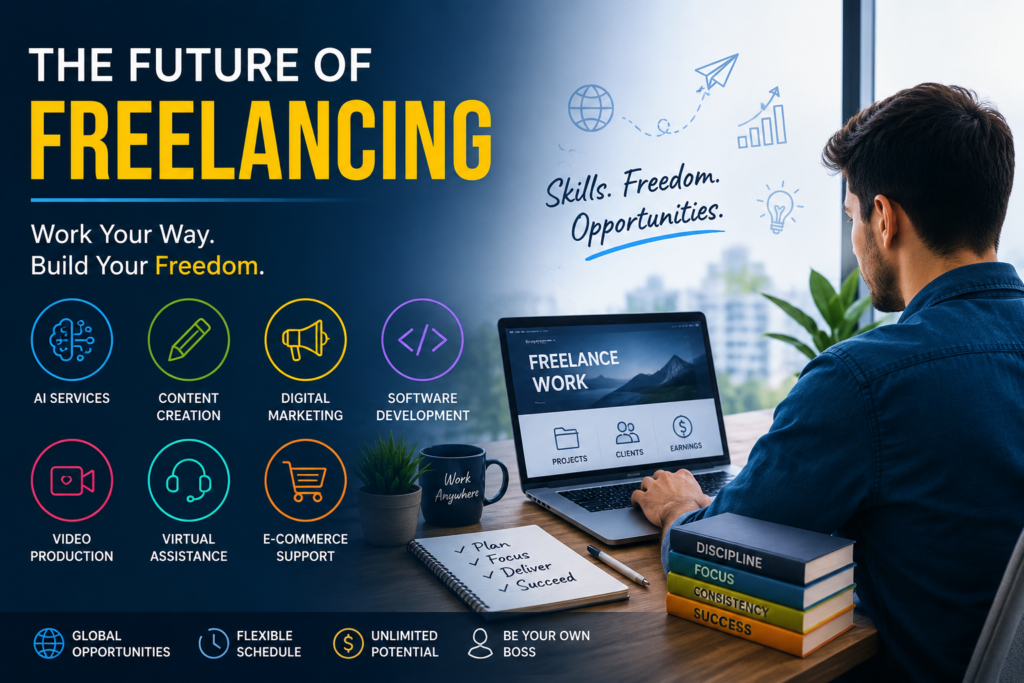
Fields like AI services, content creation, digital marketing, software development, video production, virtual assistance, and e-commerce support are expected to offer strong opportunities. With the rise of artificial intelligence and automation tools, freelancers who continuously upgrade their skills will have a significant advantage in the global digital economy.
Conclusion
Freelancing is one of the most accessible ways to earn money online and build a flexible career. By identifying your skills, creating a strong portfolio, building an online presence, and consistently delivering high-quality work, you can attract clients and grow your income over time.
Success in freelancing does not happen overnight, but with patience, persistence, and continuous learning, you can create a rewarding and profitable freelance business in 2026 and beyond.
Frequently Asked Questions
Can I start freelancing with no experience?
Yes. Many freelancers begin with sample projects and gradually build experience through smaller jobs.
How long does it take to get your first client?
It varies, but consistent applications and a strong profile can help you find clients within weeks.
Which freelance skill is most profitable?
Web development, digital marketing, SEO, software development, copywriting, and video editing are among the highest-paying freelance skills.
Is freelancing a good career in 2026?
Yes. The demand for freelance professionals continues to grow as more businesses hire remote talent worldwide.
1 thought on “How to Start Freelancing for Beginners: The Complete Guide (2026)”